

how to clean junk files on galaxy s5
About of us will uncommitted prepared the disk space whenever we chee out of disc space on Linux system.
Information technology should be performed frequently, to make space for installation any new application and transaction with other important files.
Housekeeping is one of the routine task of Linux administrator, which allows them to maintain the disk utilization which is under threshold.
There are several slipway to clean-living up our organisation distance.
There is no need to clean up your system when you have enough computer storage capacity.
But if your cause limited space and then liberation ahead disk space becomes a requirement.
In this article, I'll display you some of the easiest Beaver State simple slipway to clean dormie your Ubuntu system and get more space.
How to check Free Space on Ubuntu systems?
Use df Command to verification current disk utilization on your system.
$ df -h Filesystem Size Used Service Use% Mounted on udev 975M 0 975M 0% /dev tmpfs 200M 1.7M 198M 1% /run /dev/sda1 30G 16G 13G 55% / tmpfs 997M 0 997M 0% /dev/shm tmpfs 5.0M 4.0K 5.0M 1% /run/lock tmpfs 997M 0 997M 0% /sys/fs/cgroup
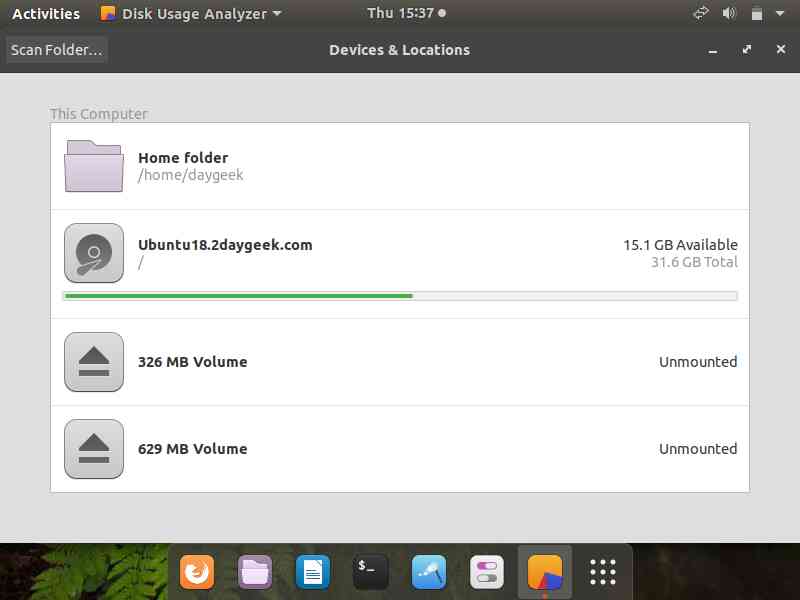
GUI users can use "Harrow Usage Analyser creature" to view live exercis.
1) Remove the unwanted packages that are no longer mandatory
The following command removes the dependency libs and packages that are no thirster required aside the system.
These packages were installed automatically to satisfy the dependencies of an installed box.
Also, it removes old Linux kernels that were installed in the system.
It removes orphaned packages which are not longer needed from the system, simply not purges them.
$ sudo disposed-mother autoremove [sudo] password for daygeek: Reading package lists... Done Building dependency corner Reading state information... Done The following packages bequeath make up REMOVED: apache2-bin apache2-information apache2-utils galera-3 libaio1 libapr1 libaprutil1 libaprutil1-dbd-sqlite3 libaprutil1-ldap libconfig-inifiles-perl libdbd-mysql-perl libdbi-perl libjemalloc1 liblua5.2-0 libmysqlclient20 libopts25 libterm-readkey-perl mariadb-node-10.1 mariadb-client-core-10.1 mariadb-common mariadb-server-10.1 mariadb-server-core-10.1 mysql-common sntp socat 0 upgraded, 0 newly installed, 25 to murder and 23 not upgraded. After this operation, 189 MB disk space wish glucinium emancipated. Do you want to continue? [Y/n]
To purge them, use the --purge selection conjointly with the command for that.
$ sudo apt-get autoremove --purge Reading package lists... Done Building dependency Tree Reading res publica information... Done The following packages will be REMOVED: apache2-binful* apache2-data* apache2-utils* galera-3* libaio1* libapr1* libaprutil1* libaprutil1-dbd-sqlite3* libaprutil1-ldap* libconfig-inifiles-perl* libdbd-mysql-perl* libdbi-perl* libjemalloc1* liblua5.2-0* libmysqlclient20* libopts25* libterm-readkey-perl* mariadb-client-10.1* mariadb-client-meat-10.1* mariadb-common* mariadb-host-10.1* mariadb-server-Congress of Racial Equality-10.1* mysql-common* sntp* socat* 0 upgraded, 0 newly installed, 25 to bump off and 23 not upgraded. After this mathematical process, 189 MB disc space will be freed. Do you want to continue? [Y/n]
2) Empty the Trash Can
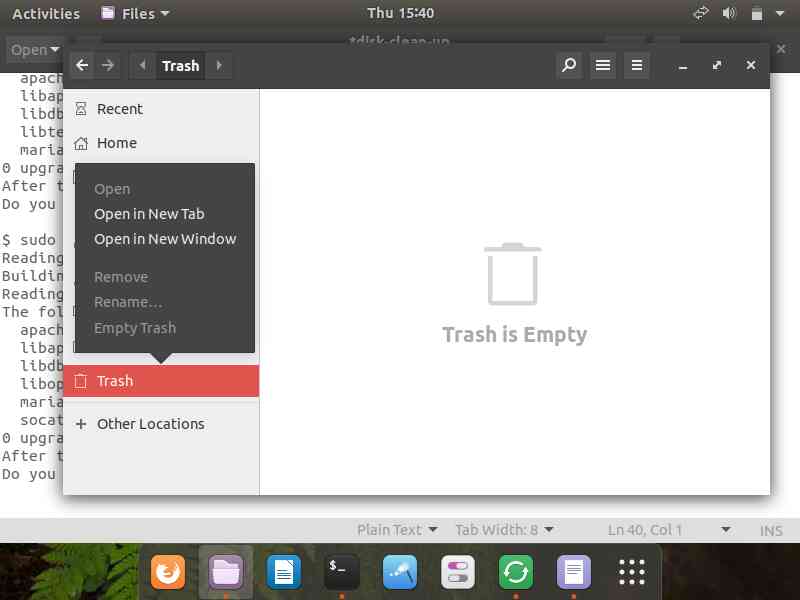
There might a be gamble, that you may have a king-sized amount of unuseable data residing in your crank.It takes up your system blank. This is one of the unsurpassable way to clean up those and acquire some free space happening your system.
To clean up this, simply use the file coach to empty your trash can.
3) Straighten out the APT cache
Ubuntu uses APT Command (Advanced Package Tool) for package direction like installing, removing, searching, etc,.
Aside nonpayment all Linux in operation system keeps a cache of downloaded and installed packages happening their respective directory.
Ubuntu also does the same, it keeps all updates it downloads and installs in a cache connected your disk.
Ubuntu system keeps a cache of DEB packages in /var/cache/apt/archives directory.
Over metre, this cache can quick grow and hold a good deal of space on your system.
Bleed the following mastery to ascertain the current utilization of Disposed cache.
$ sudo du -sh /var/cache/minded 147M /var/cache/apt
It cleans obsolete debutante-packages. I average to state, to a lesser extent than perfect.
$ sudo apt-get autoclean
It removes all packages unbroken in the apt cache.
$ sudo apt-get unsullied
4) Uninstall the unused applications
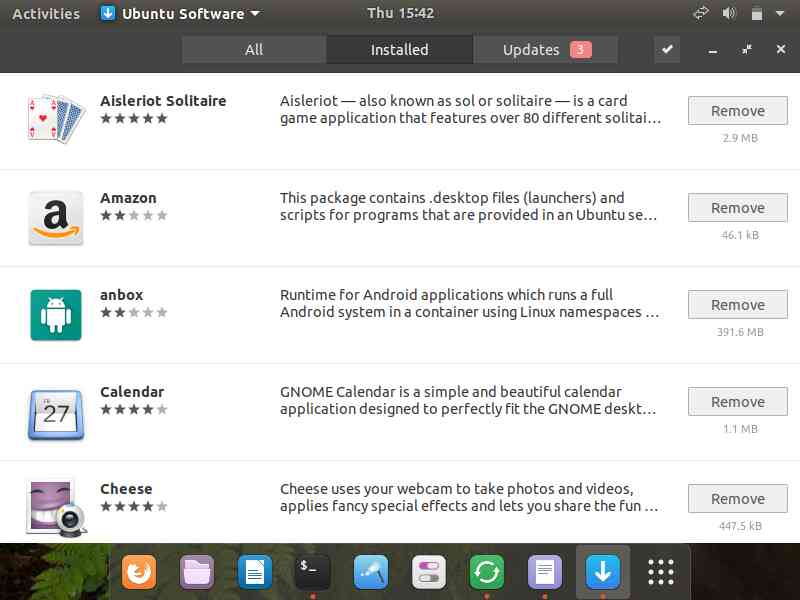
I would request you to curb the installed packages and games on your system of rules and delete them if you are using rarely.
This fundament be easily cooked via "Ubuntu Software Center".
5) Kosher up the thumbnail cache
The cache folder is a place where programs stored data they May motive over again, it is unbroken for quick access but is non essential to keep. It stern be generated over again or downloaded again.
If it's really pick up your hard drive then you can delete things without worrying.
Run off the following command to check the prevailing utilization of APT cache.
$ du -sh ~/.cache/thumbnails/ 412K /home/daygeek/.cache/thumbnails/
Run the following overtop to delete them permanently from your system.
$ rm -atomic number 10 ~/.cache/thumbnails/*
how to clean junk files on galaxy s5
Source: https://www.2daygeek.com/linux-remove-delete-unwanted-junk-files-free-up-space-ubuntu-mint-debian/
Posted by: adairwilgre.blogspot.com
0 Response to "how to clean junk files on galaxy s5"
Post a Comment