

Jupiter's Legacy: The Netflix show about the next generation of superheroes - adairwilgre
Jupiter's Legacy: The Netflix show about the next generation of superheroes
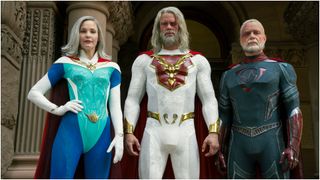
"Everybody forever says to me, 'What will this show bring that other superhero things harbour't done ahead?'" Mark Millar says while discussing Jupiter's Legacy, Netflix's new display based on the author's drama book series of the cookie-cutter name. "I think back the number one matter is the ethics of superheroes themselves. At one time they showtime falling out with each other, information technology suddenly moves beyond superhero versus supervillain who's robbing a swear, which can get a little iterative. Sol to really take information technology to the next level, for me, is so sexy."
The show and comic book (drawn by Frank Quitely) centers on the formation of superhero group the Union, you bet the next generation of heroes copes with trying to live capable their enthusiastically standards. Sheldon Sampson (Josh Duhamel), AKA The Utopian, leads the team up, and he expects one of his two children, Brandon (Andrew Horton) – alias Paragon – or Chloe (Elena Kampouris), an addict who wants nothing to do with the whole hero lifestyle, to someday take his place.
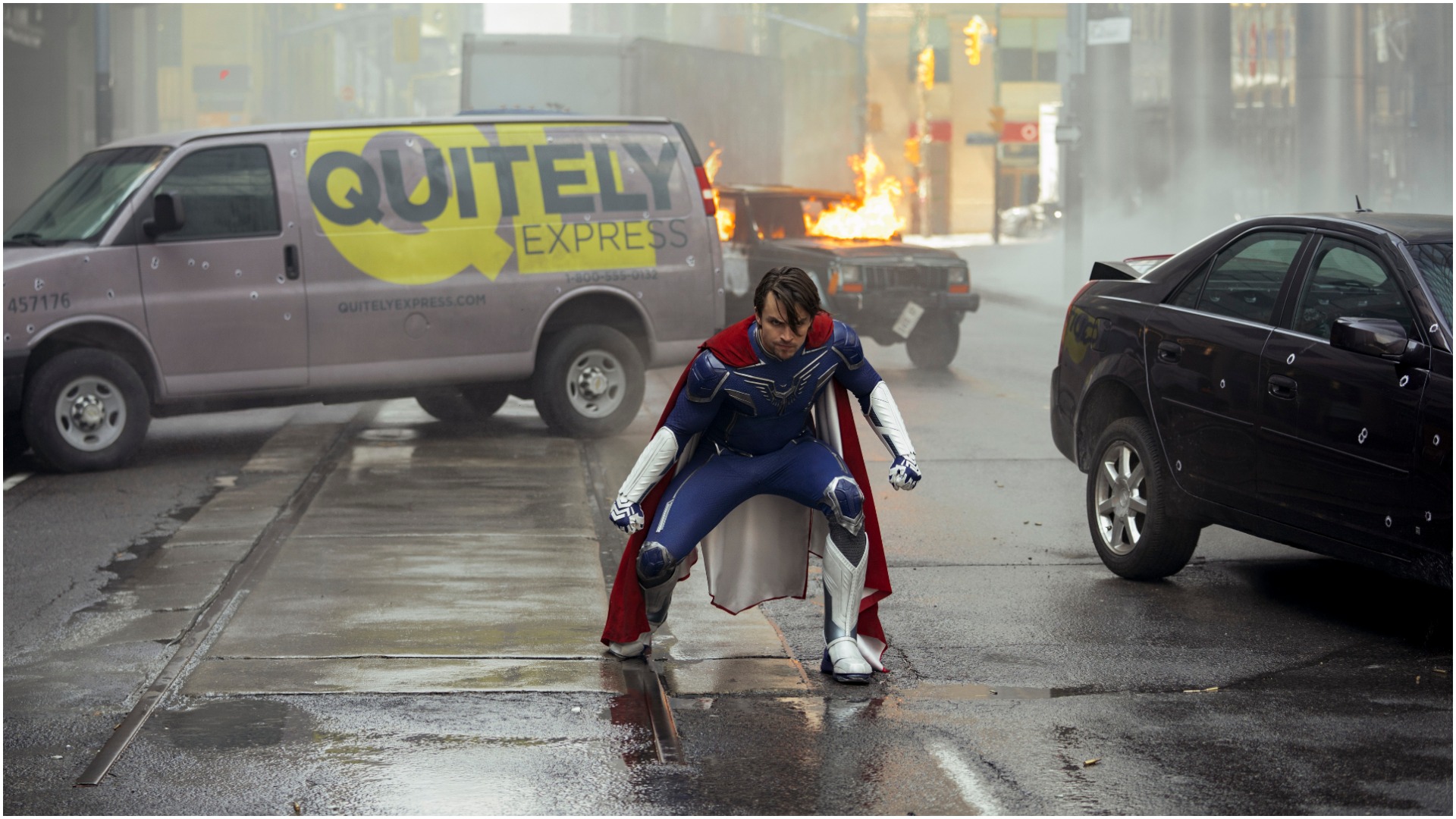
"It's everything to him," Horton says. "Brandon's whole existence is to get along The Utopian... The legacy that Utopian has laid down is of much a high caliber and is so unattainable that whatsoever Brandon does, he can't appear to match those expectations. So in a certain sense, it's a flawed kinda mission for him because he wants so desperately to reach that level. But in The Book's eyes, in Sheldon's eyes, atomic number 2 isn't ready to bash that, and he's not sure that He always will. So it's tainted for Brandon, because no matter what he does, He can ne'er fulfil the bequest that's get before."
Superheroes are abundant in the worldly concern of Jupiter's Legacy. However, while they whol work together under The Utopian's moral Code, the fervor comes when the relationships between these supes start to come apart down. This plays out over multiple timelines, including flashbacks to the '20s and '30s when the Union – biform of The Utopian, his ultimate wife Grace, AKA Lady Liberty (Leslie Bibb), his sidekic Walter, AKA Brainstorm (Ben Daniels), the Flare, AKA Fitz Elfin (Microphone Virginia Wade), Skyfox, AKA Saint George Hutchence (Mat Lanter) and Gamy Bolt, AKA Richard Conrad (David General Hirsh) – gain their powers. In the present, we meet the future generation of heroes, including The Utopian's children, all while a inexplicable plot involving a supervillain onymous Blackstar emerges and threatens to tear the already fractured family apart. Things now and again get confusing as we whiz back and forth 'tween time periods, merely the core of the exhibit remains the relationship betwixt The Utopian and his family.
"Sheldon Sampson can maculation a dime on the face of the moon, but He has no clue how to verbalise to his 20 year old girl," The Utopian himself, Duhamel, says. "Helium doesn't know how to get through to his Son. He feels like he knows he's being besides hard along his son, but he likewise knows that he has to be. And this stuff is real. Wish, how DO you communicate with your family?"
Before atomic number 2 flatbottom gained his powers, there were other tensions in the family: between Sheldon and his brother, Walter, played by Daniels. And those issues arose from their own relationship with their father. "I was really into exploring the idea of what it's like to have Back breaker Elvis Aron Presley arsenic your brother, or James James Dean equally your crony – anyone who's like a zillion multiplication cooler than you are and how that impacts on you," Daniels says.
"We see how IT impacts on him terminated the 100 long time. I think it's non just Sheldon, though. Walter is like a fish out of pee in that world of the 1900s. He lives in a very alpha male environment with his brother, with his dad, with George, and he just doesn't fit in really. So he feels a destiny. He's a highly sensitive person. That relationship, or the fuel behind that kinship, or those three relationships tick over in him, and gestate and become something quite toxic a hundred years later."
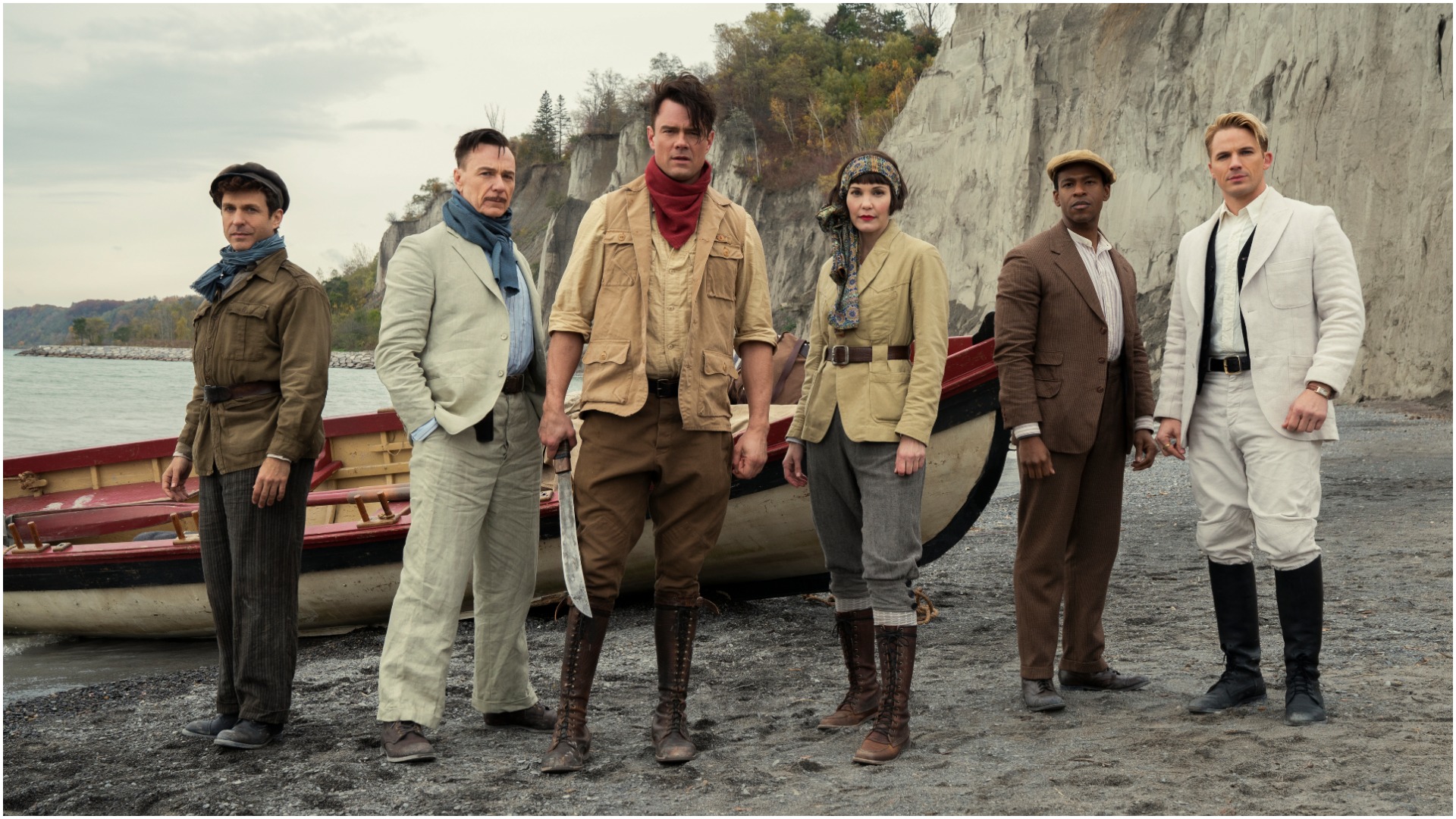
The George that Daniels refers to later becomes Skyfox, another member of the Union who, in the past, was Sheldon's closest Quaker simply had an adversarial relationship with Bruno Walter. In the present, George betrays the Union and becomes a supervillain, though the reason is unclear. Matt Lanter talks much near his characters' evident play, but won't give as well much away – untold like George's shadowy presence in the series. "I cogitate when the whole world's against you, he good would rather go into concealment than try to fight it, just we'll see," atomic number 2 says. "Again, that's in truth more of a down the route thing."
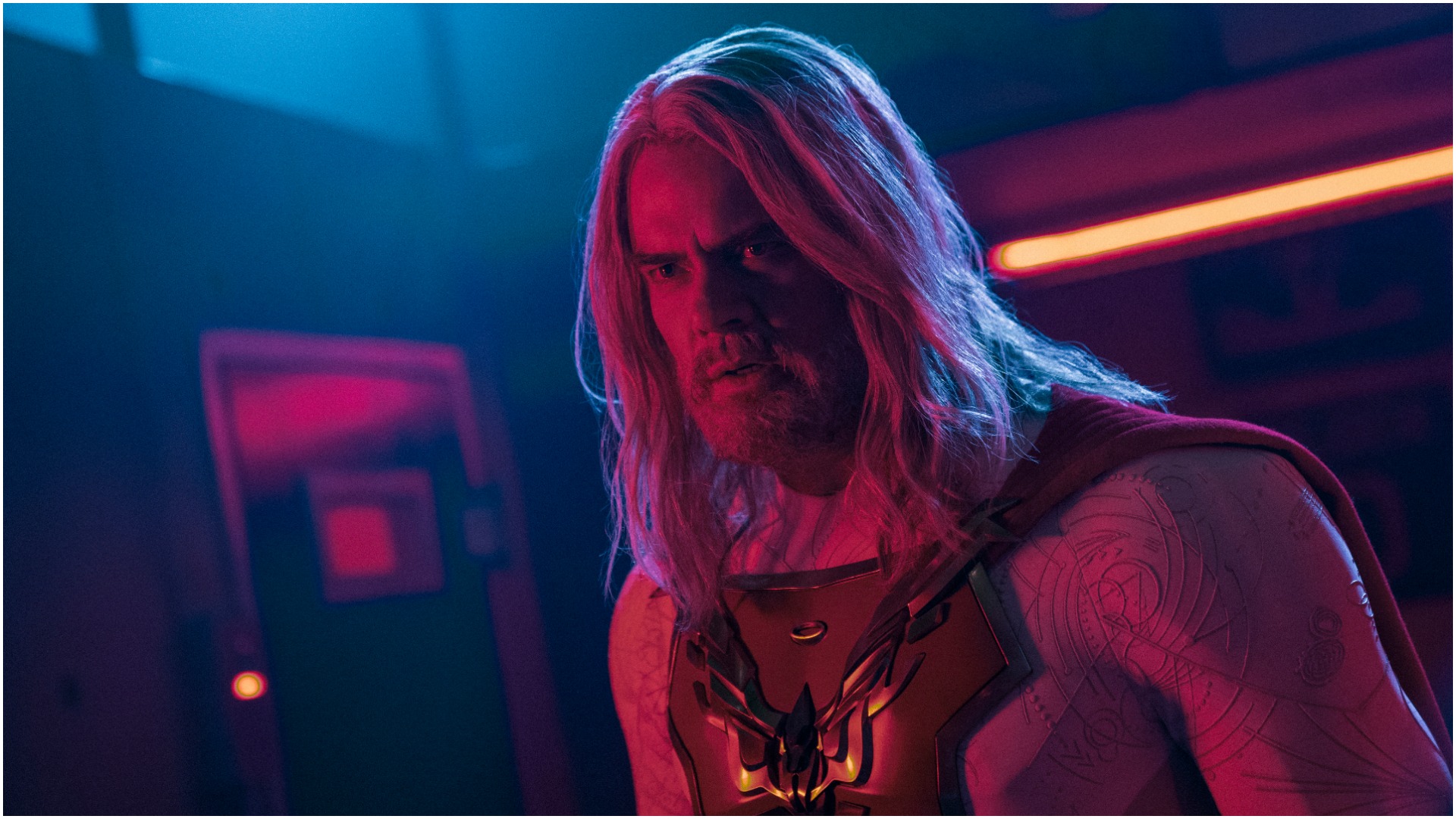
While the complexities of the familial relationships are a huge part of the show, equal weight unit is given to an ethical dilemma constituted by the unyielding Utopian's inflexible Code. For Sheldon, it's elongate: superheroes do not regularize, and they Doctor of Osteopathy not kill.
"Sheldon believes that no issue what, even if they're trying to vote out him, you do not take other life, and I guess he is highly set in his beliefs," Duhamel explains. "Part of the reason why he's in therapy right now is because I think he knows that atomic number 2 needs to get-go listening, and possibly be a bit bit more flexible. But he feels that if we commencement dynamical this Code, information technology's a slippery slope, and then it becomes a big bloodbath. So he believes rattling powerfully in 'this is what we do. We wear't change, this is it.'"
Co-creator Millar – comic book royalty, having previously created the likes of Kick-Ass and written famous storylines for Marvel and DC – further explains the ethical considerations the show grapples with, which come into razor-sharp focus after a dramatic bit in the first episode. "Superheroes undergo been around 83 years," atomic number 2 says, "and they have a pretty solid placed of principles that all superheroes kind of follow, roughly. So it's quite interesting for person to come along and break the cycles/second. So it's like, 'okay, we've killed mortal, where do we go from here?' And the side by side big ethical dilemma is, if you have the baron to move mountains, if you can change the world, is information technology unethical non to shift the world?
"So that's what the superheroes start saying to for each one other, especially the younger millennial heroes, they'Re like, 'We're not demented about the way you guys have been running the show. Is it wrong, that we just stand back and Lashkar-e-Toiba people starve in some parts of the world, or anguished in concentration camps, or at that place's a climate emergency and we'Ra doing nothing about it?' Thusly that suddenly becomes really interesting. Then again there's also an every bit strong arguin from the parents, which is, hang connected a min, it's not our place to come with in and tell people what to doh, just because we'atomic number 75 strong."
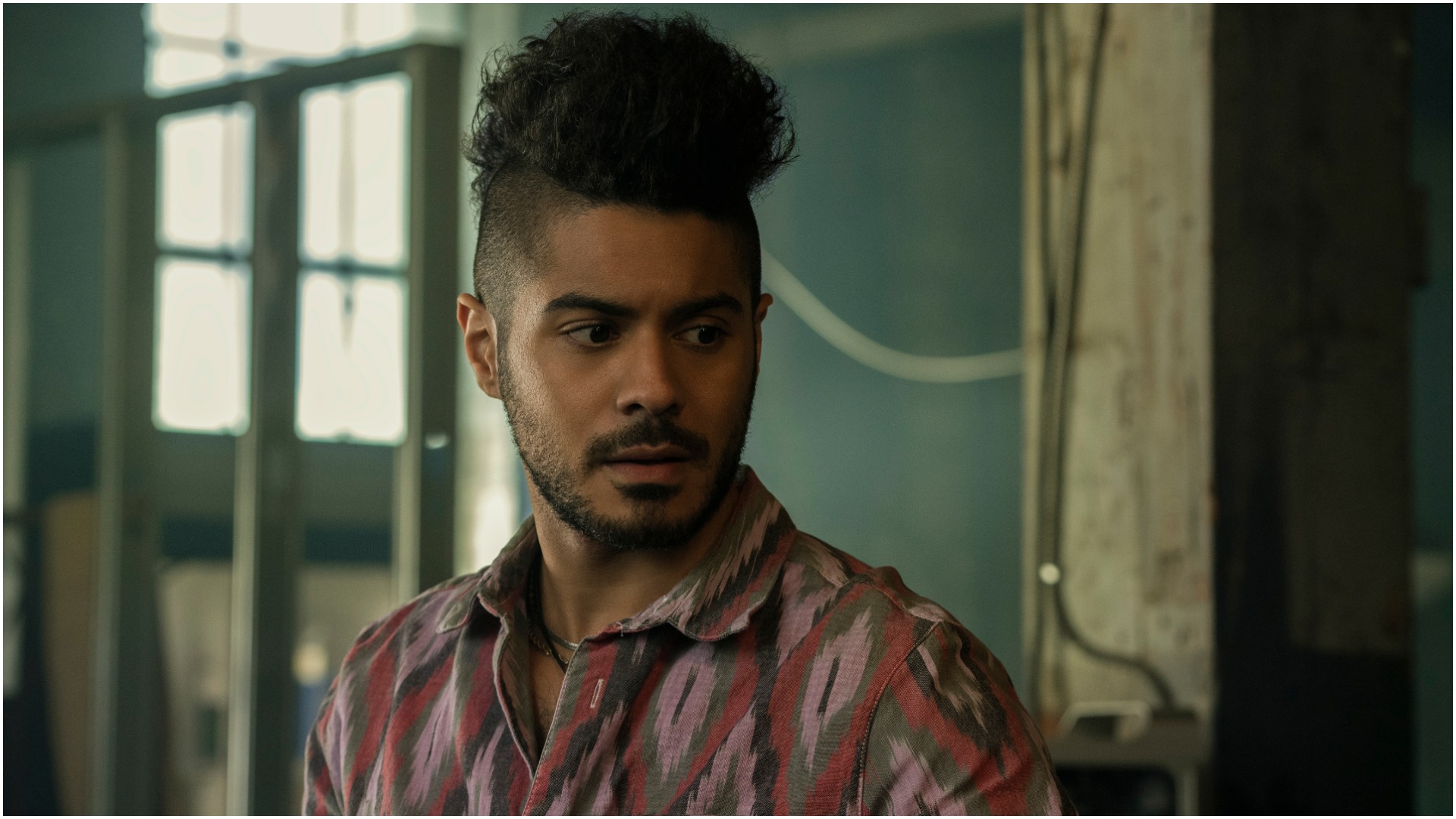
So, a household play that asks big ethical questions – Jupiter's Legacy sounds unlike most superhero series. Heretofore, in a world where the MCU and DCEU are both coming to the small shield, and Amazon's already pumping out shows like Invincible and The Boys (and Netflix even has The Comprehensive Academy), make out we really need another superhero property on our screens?
"I think there will always be room for superhero projects, because I think that superhero projects are stories about belief in things that are greater than ourselves, whether it be like the Encrypt for The Utopian, operating room Hope like Superman," Ian Quinlan, who plays not-quite an-hero-not-quite an-baddie Hutch, explains. "But I think what makes this superhero show contrasting from others is that I witness IT to follow actually more of a drama than it is a superhero show, ironically. It's more about this family, and the struggles that they die off through and the stresses that their calling of being heroes takes on them as individuals and so as a group, and how IT puts strain happening every last of them in our society, or puts America in combatants with our society. So I'm really emotional to see these internal monologues, to really flavour at this sort of superhero character figure of The Utopian and really see how he wrestles every single day just being WHO he is, as well as being a father."
What also makes Jupiter's Legacy challenging for drama book fans is that, even if you have read the source corporeal, you cannot wear anything. Things happen differently in the new Netflix express. "I think I can suppose with confidence that we maintain the DNA and the integrity of the story, what successful it spark, what made it unique from complete the other shove outgoing there, patc also injecting twists and turns and cliffhangers that benign of expound soured of the rich stuff in the book itself," Chloe actor Kampouris says. "They take some really cool elements, and then twist it out on its head, and create some twists that even if you've read the comics, you North Korean won't see coming, and hopefully, information technology will get along you even more excited… I think information technology's a fine balance of maintaining the bones of it, and then giving it something fresh and new because it's beingness translated onto the screen."
A superhero show that's not petrified to tackle some big questions, Jupiter's Bequest is set to cost an entertaining, cross-generational journey through a new super-macrocos.
Jupiter's Legacy arrives May 7 on Netflix. In the meantime, check out the best Netflix shows to stream now.

I'm a freelance Entertainment Author Hera at GamesRadar+, covering all things film and TV for our Tot Film and SFX sections. I previously worked on the Disney magazines team at Immediate Media, and also wrote on the CBeebies, MEGA!, and Star Wars Galaxy titles afterward getting my BA in English.

Source: https://www.gamesradar.com/jupiters-legacy-netflix-interviews-mark-millar/
Posted by: adairwilgre.blogspot.com
0 Response to "Jupiter's Legacy: The Netflix show about the next generation of superheroes - adairwilgre"
Post a Comment